Free VIN Decoder
Nissan VIN Decoder
Decode your Nissan VIN instantly
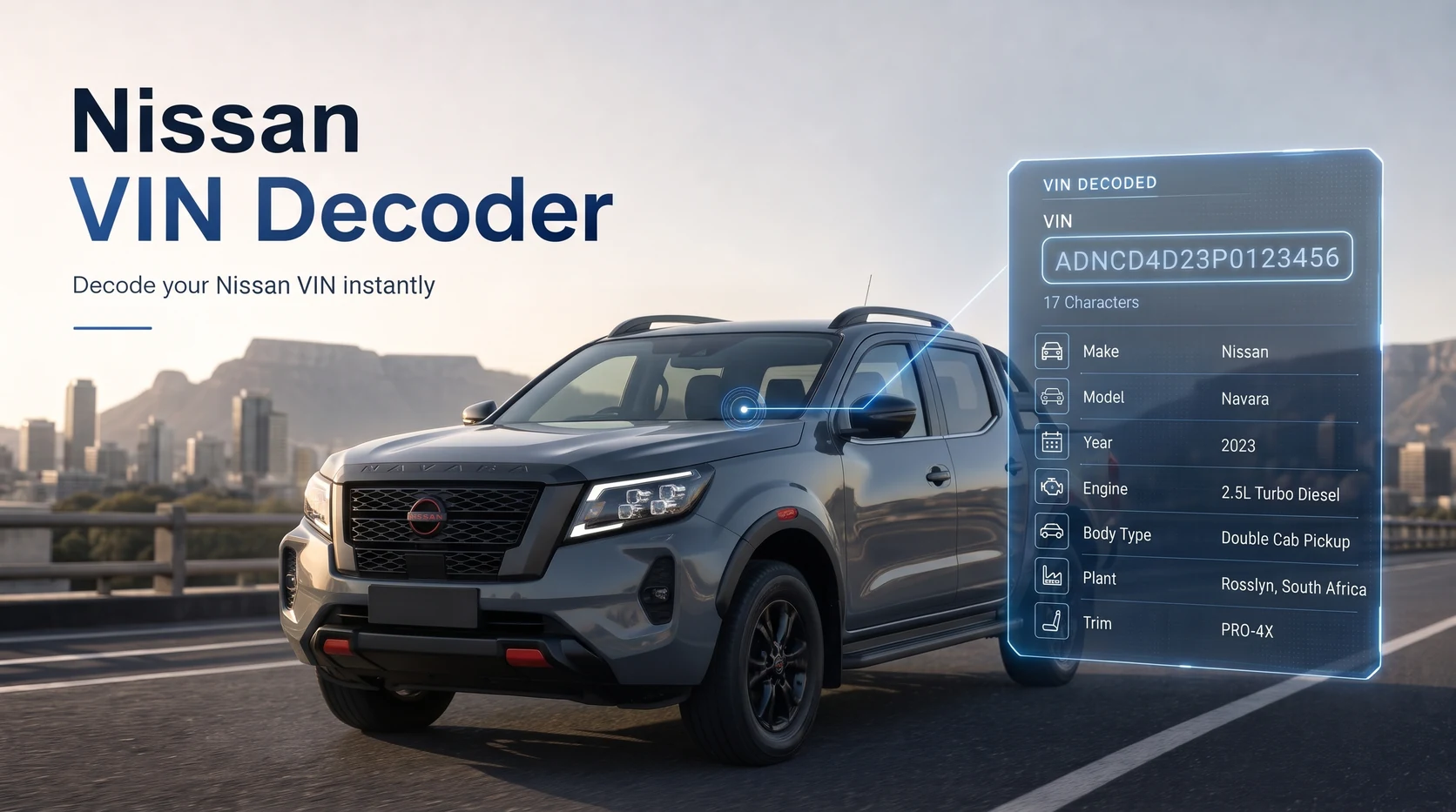
Illustrative VIN preview. Free results show the available make, model and type.
Free Nissan VIN Decoder
Nissan has deep roots in South Africa, with the Navara and the long-running NP200 and Hardbody bakkies built in Rosslyn, alongside imports like the Magnite and X-Trail. Used Nissan bakkies are everywhere, and a work vehicle’s spec isn’t always what the advert says. A Nissan VIN decoder reads the 17-character VIN and shows the available make, model and type. Run a Nissan VIN check before you buy to compare those details with the seller’s advert.
What Can a Nissan VIN Decoder Tell You?
- Vehicle make, such as Nissan
- Model and type for vehicles such as the Navara, NP200, Hardbody, Magnite or X-Trail
How to Decode a Nissan VIN
- WMI (characters 1–3) shows who built the vehicle and where. Nissans built in South Africa, such as the Navara and NP200, can start with A. Japan-built Nissans, such as many X-Trails, usually start with JN. India-built models, such as the Magnite, can start with M.
- Vehicle descriptor (characters 4–8) can describe the model, body, cab and engine in Nissan’s codes.
- Check digit (character 9) is used on North American vehicles. It may serve another purpose on SA Nissans.
- Model year (character 10) can indicate the year. Confirm it against the registration documents.
- Plant code (character 11) can identify the assembly plant.
- Serial number (characters 12–17) identifies the unique production number for that vehicle.
Where Can I Find the VIN on a Nissan?
- Stamped into the frame rail on Navara and Hardbody bakkies
- On the dashboard at the base of the windscreen on most newer models
- On the plate or label on the door pillar
- In the engine bay, on the identification plate or stamped on the firewall
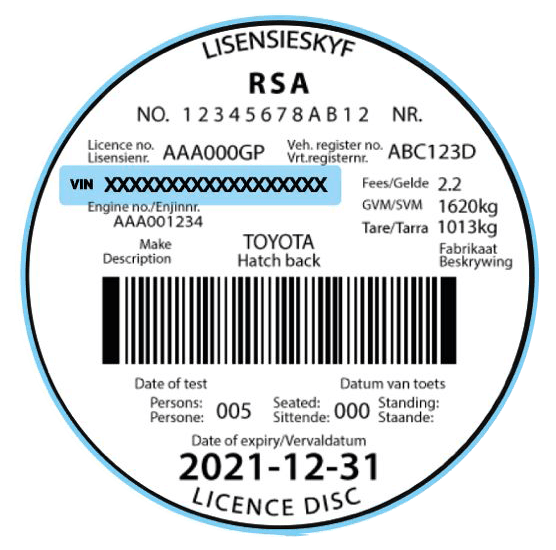
- On your licence disc, NaTIS registration certificate, service book and insurance documents
On a bakkie, check the VIN stamped on the chassis itself. It should match the paperwork exactly.
Popular Nissan Models You Can Decode
Why Check a Nissan VIN Before Buying?
Nissan bakkies are workhorses for small businesses, farms and fleets, so many used ones have hard histories, and bakkies are a common target for theft.
- Compare the decoded make, model and type with the Nissan in the advert.
- For a Navara advertised as a 4x4 PRO-4X, verify the drivetrain and trim against the vehicle’s documentation.
- Check that the chassis VIN matches the licence disc and NaTIS papers.
- A ground-down, re-stamped or mismatched chassis number is a serious warning sign.
- Use the decode as a first step before checking the vehicle’s history.
A VIN decode helps identify the vehicle. A full vehicle history report covers past events where records are available.
Want More Than a Nissan VIN Decode?
A VIN decoder gives you basic identification for a Nissan. Ex-fleet bakkies often have more history than they show, so a FirstCheck report adds theft checks, accident and claim history, finance status and market value, where records are available.
Frequently Asked Questions
Nissan VIN Decoder FAQ
What is a Nissan VIN number?Open
The unique 17-character code that identifies one specific Nissan. In South Africa it’s also called the chassis number.
Where can I find the VIN on a Nissan Navara?Open
On the chassis rail, the door pillar plate, in the engine bay, and on your licence disc and registration papers.
How do I decode a Nissan VIN?Open
Enter the 17-character VIN in the decoder above to see the available make, model and type.
How many characters are in a Nissan VIN?Open
A modern VIN has 17 characters, using letters and numbers.
Can a Nissan VIN show the model year?Open
The 10th character can indicate the model year. Confirm it against the registration documents.
Can I decode a Nissan NP200 VIN?Open
Yes. The NP200 was built in South Africa, so its VIN can start with A.
Can I decode a Nissan Magnite VIN?Open
Yes. Enter the Magnite’s 17-character VIN to check the available make, model and type.
Can I check a Nissan VIN before buying a used bakkie?Open
Yes. Decode the VIN first, then run a full vehicle history report to check for theft, accidents and outstanding finance.