Buying from a private seller
- Price: usually lower, because there's no dealer margin
- Legal protection: limited. The car can be sold voetstoots ("as is").
- Problems after the sale: generally yours to fix
- Finance: you arrange your own, and you have to make sure the seller's bank is paid off
- Paperwork: you and the seller handle the roadworthy and the change of ownership
- Trade-in: not possible
- Scam risk: higher
Buying from a dealer
- Price: usually higher
- Legal protection: the Consumer Protection Act applies
- Problems in the first six months: you can ask for a repair, a replacement or your money back
- Finance: the dealer arranges it and settles any loan still on the car
- Paperwork: the dealer registers the car, and the roadworthy is usually included
- Trade-in: usually possible
- Scam risk: lower, but not zero
Your rights when you buy from a dealer
Under the Consumer Protection Act, a dealer has to sell you a car that's in good working order and free of defects for its age and mileage. If a defect shows up within six months, you can ask for it to be repaired or replaced, or for a refund. A dealer can't sell you a car voetstoots.
Your rights in a private sale
The Consumer Protection Act generally doesn't cover once-off sales between private people. A private seller can sell voetstoots, but they can't hide a problem they know about. If they deliberately hid a known defect, you may still have a claim against them.
What is a demo car?
A demo car is a new car the dealership has used for test drives. It usually has low mileage and most of its warranty left, and it costs less than the same car brand new. Ask exactly when the warranty started, because it usually starts from the car's first registration, not the day you buy it.
What are certified pre-owned cars?
Certified pre-owned cars are used cars sold by a franchised dealer after passing an inspection set by the manufacturer. They usually come with an extended warranty. They cost more than other used cars of the same age, but the risk is lower.
When a private sale makes sense
- You know how to check a car, or you'll pay a mechanic to
- The saving is worth it, usually tens of thousands of rand
- The seller has the full service history and the original papers
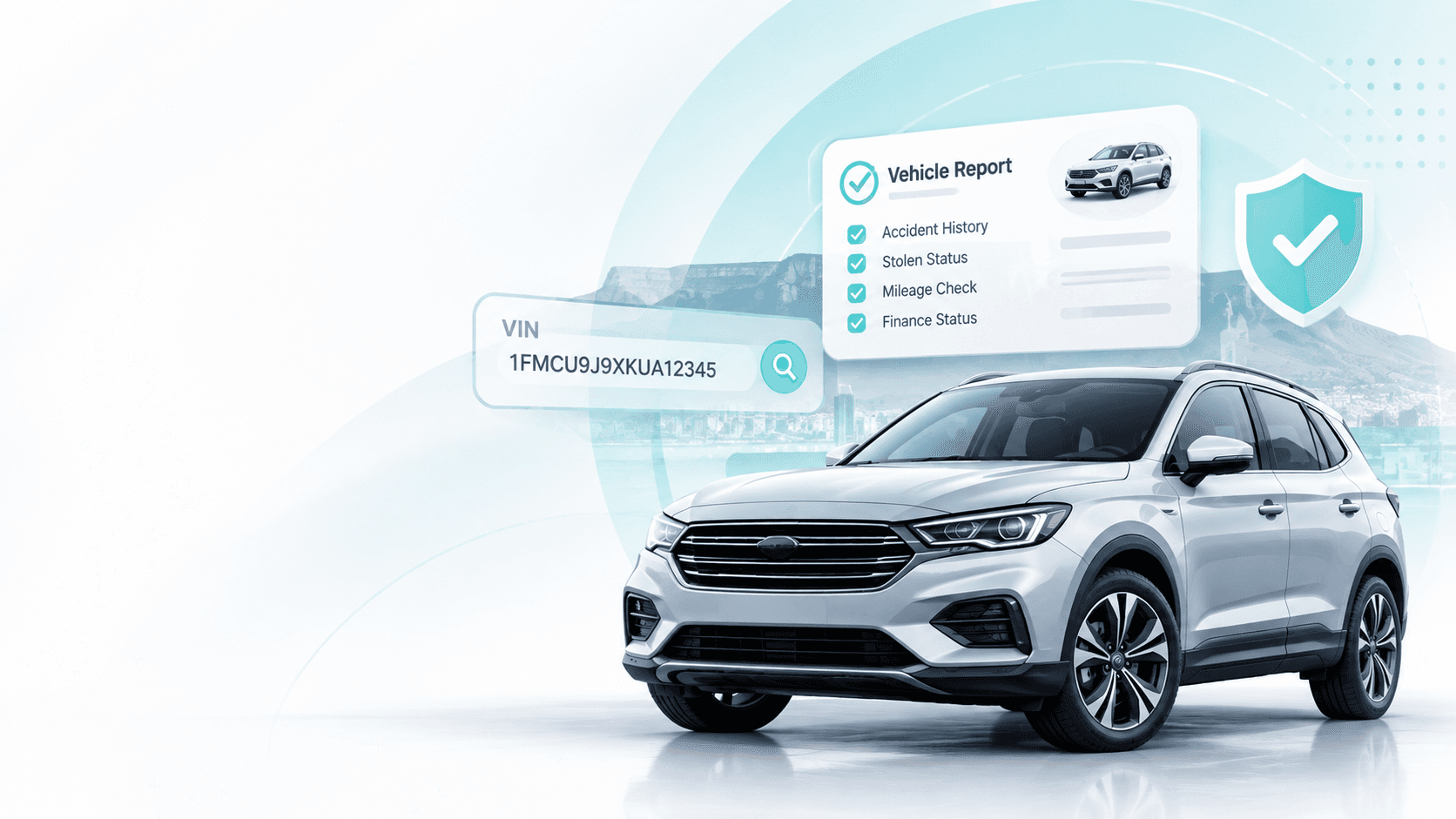
- You can check the car's history before you pay
When a dealer makes sense
- You want finance and a trade-in sorted in one place
- You want legal protection if something goes wrong
- It's your first car, or you don't have time for the paperwork
Checks to do either way
- The VIN and engine number match the papers
- The car isn't reported stolen
- There's no finance owing, or the settlement is arranged. Here's how to check if a car has finance.
- The accident and insurance claim history is checked
- The price is in line with the car's market value
For the full inspection on the day, use our used car checklist. Buying from an online advert? Read about Facebook Marketplace car scams first.
This article is general information, not legal advice.